

After starting out as an importer of American semiconductors in the 1970s, Japan rapidly rose to dominate the chip industry, surpassing the U.S. in global sales of memory chips by 1982 and accounting for 51 percent of the global semiconductor market by 1988.
This meteoric rise was made possible by massive government investments: Semiconductor R&D accounted for 26 percent of Japan’s total R&D spending in 1977. Further, private-public partnerships allowed Japan’s leading tech companies to collaborate, while largely keeping foreign chips out of the country.
But it also made the Japanese semiconductor industry rigid. When market forces started to change in the late 1980s and early 1990s, Japanese companies struggled to adjust and the industry fell almost as quickly as it rose.
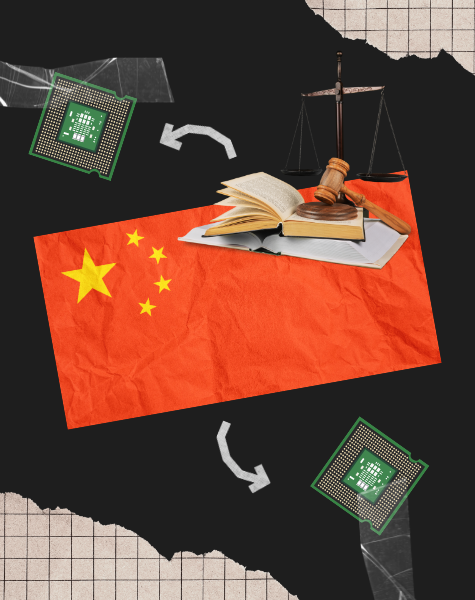
Now, as President Trump works to boost the American semiconductor industry, he seems to be falling into the same trap that led to Japan’s collapse in semiconductor relevance.
In August, Trump and Intel announced an “historic agreement” that saw the U.S. government purchase 10 percent of the struggling semiconductor manufacturer for $8.9 billion. To buy the stock, Trump used $5.7 billion of CHIPS and Science Act grants that had already been awarded to Intel, with another $3.2 billion coming from a Defense Department contract that was also previously awarded to Intel.
Shortly after the deal, National Economic Council Director Kevin Hassett said the administration was interested in buying similar stakes in other companies, so as to boost the domestic companies leading America’s AI race against China. But even some Trump allies have questioned these efforts to directly influence the economy.
“I don't think the federal government should be taking equity stakes in private companies,” Senate Commerce Committee Chair Ted Cruz told National Journal in early September. “I think that is a mistake and a slippery slope.”
The Intel press release said the government would only have “passive ownership” over the company, with no board seats or other governance rights. But Trump has shown in the past that he is more than willing to use the power of the executive branch to bend agreements and force companies to comply with his whims.
On Thursday, Nvidia announced a $5 billion investment in Intel that will allow the two companies to collaborate on R&D. Nvidia previously agreed to give the government 15 percent of certain chip sales to China, further eroding the divide between government and private industry.
If Trump uses CHIPS and Science funds, or any other money the executive branch may have access to, to buy stakes in more chip manufacturing companies it will place the American semiconductor industry in the same position as Japan in the 1980s, potentially hurting domestic innovation and flexibility, and undercutting the biggest advantage the U.S. has in the race to beat China in the AI market: innovation.
The Chinese government already has ownership stakes in its domestic chip manufacturing companies, allowing them to tip the economic scales to help their favored companies, while China's willingness and ability to invest in chip R&D will likely always outpace America’s. If America tries to beat China in the AI race by playing by their rules, it will lose.
America’s ability to lead the global economy has always relied on the flexibility of its economy and Americans’ willingness to innovate, even if innovation means the death of former national champions in industry like Intel.
—Philip Athey

Regulation
Top regulation takeaways:
- The GOP continues an internal fight between those who favor a hands-off approach to regulating AI versus a more populist approach that is highly skeptical of the developing technology.
- Senate Commerce Committee Chair Ted Cruz, along with some in the White House, are the face of the AI-friendly GOP. Cruz still hopes to pass a moratorium on state AI bills, while the White House continues to endorse a national regulation that would preempt all state AI regulations.
- Sen. Josh Hawley leads the populist AI-skeptics in the Republican caucus, calling multiple hearings on potential AI dangers and introducing legislation to reign in the big tech companies.
‘Not at all dead’: Cruz says AI moratorium will return: Sen. Ted Cruz said that a proposal for a 10‑year moratorium on state and local AI regulation is still alive, despite significant pushback from his GOP colleagues, who managed to strip the provision from this year’s reconciliation bill. (Politico)
‘We don't want California to set the rules for AI across the country,' Trump adviser says: Sriram Krishnan, senior adviser to President Trump on AI, said the administration opposes states heavily regulating the burgeoning AI industry, but instead favors a single national standard set at the federal level to better compete with China. (Politico)
Parents beg senators to prevent AI chatbot harms to kids: Lawmakers pledged to take action to protect kids from AI-powered chatbots, after a number of teens and kids have died by suicide or were hospitalized after they started using the programs. (National Journal)
Bills and roadmaps
Top bills and roadmaps takeaways:
- Despite early promises after the launch of ChatGPT to quickly regulate AI, Congress still remains in the earliest stages of the process, stuck on even what approach to take.
- Some bills focused on very specific topics such as AI-generated revenge porn have advanced, and there are growing talks on Capitol Hill about protecting consumers from increased energy costs of the data center boom.
House bill targets rising rural utility costs from AI data centers: The bipartisan bill directs the Energy, Interior, and Agriculture departments to study how surging AI data center expansions are driving up rural energy costs for consumers. (FedScoop)